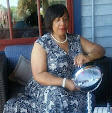
Jose, a co-worker at the District Office used to send tidbits and anecdotes about growing up in Oakland. Going to Montgomery Wards, going to the movies for a quarter, the old haunts, things like that. I got to thinking about how I grew up and started jotting down memories. Before I knew it I had the meat for some real stories and a list of topics of which to write. Something keeps coming up and the list keeps growing. Growing up in Oakland is a mine for all kinds of memories and thus, stories. As a genealogist, I know that writing one’s stories is a gift to future generations, so I will add my contribution by sharing such topics as:
Going to DeLauer’s Newsstand
My times at Garfield and Manzanita schools
Dancing around the Maypole
Being bullied
Playing tetherball
Walking to Dimond Park and swimming lessons
My favorite television programs- see last week’s blog from 9/7/09.
These and other topics I am writing or will write about.
Tuesday, September 15, 2009

Monday, September 7, 2009
Memory Monday- Amos n' Andy- My Reality TV

As twilight set in on a cool autumn night, with the dinner dishes cleared and baths on the horizon, I plotted with my brother to watch one of our favorite television programs, Amos N’ Andy. This had to be about 1958, 59. The program held a certain fascination that Leave It to Beaver, Sky King, and Lassie just did not. While the inhabitants of these shows were pasty, pale-skinned and mostly fair-haired people, the people on Amos N’ Andy looked like me. It was fascinating sitting in front of our black and white TV set that had a broken antennae courtesy of my little brother and sister (whole other story). But the picture was very clear of Negro people living in New York City living, laughing, and loving on a nightly basis through my TV screen. There was con man Kingfish, Big guy Andy, loud- mouth Sapphire, attorney Houlihan and peace-maker family man Amos. It seemed Kingfish was always talking Andy into some kind of scheme that inevitably got him into trouble with his wife Sapphire, and his mother-in-law. Amos would come to the rescue with his wise sayings and advice. They were hilarious and for me a joy to watch. But what did I know? I was a little girl who loved watching television.
Why was I sneaking and plotting to watch one of my favorite shows? Because I wasn’t supposed to be watching this program, the reason being that my parents considered this program to be ignorant and an insult to Negroes. In their escalating middle-class existence having grown up in the south, both from humble beginnings, obtained college educations and negotiating Negro geography, the stereotypes were just too blaring. Kingfish would rather con somebody than work, was shiftless and lazy. Sapphire was loud and emasculating as well as her mama. Andy spoke poor English and was easily led. Houlihan was a joke as an attorney. Buffoons they were, laughing, joking, always happy-go-lucky. This is what they portrayed. But of course, this went over my head. It was just fun entertainment but I also saw more.
Even at that young age, I saw the good points about Amos N’ Andy. I can remember this was a show where there were black business owners, doctors, attorneys, cab drivers and families that I could relate to. I remember one of my favorite shows was a Christmas segment where Amos’s daughter was sick and all she wanted was this most beautiful doll in the store window of a department store. There was a black Santa Claus, I vividly remember. And yes, the doll was black. She had a white dress on, I think. In the late fifties, how often did we see these images? Almost never.
Unfortunately the negative aspects of the show outweighed the good and the NAACP succeeded in having the show taken off of the hair by 1960. I understand my parent’s stance. As a parent now, I fully understand the impact of the images that our children are exposed to. As an adult I cringe at some of the antics that Kingfish and Amos participated in and understand why my folks had their reservations about the program. But many of these same people, my mother included, now admit they appreciate Amos N’ Andy. It is amazing to find out that the actor who played Ebonics-talking Andy was in fact a well-educated man who spoke six or seven languages. But as a black man trying to work as an actor, this is what was offered to him. The original Amos n’ Andy was a radio show played by white men in black face. What was worse, white men imitating what they thought black people were like or actual black people playing themselves as white folks saw them?
The Amos n’ Andy series have become a legacy of black memorabilia. We have most of the tapes and I feel some pride when I see Andy talking to his little boy and girl dispensing his wisdom while walking strong and tall as a man with dignity.
Why was I sneaking and plotting to watch one of my favorite shows? Because I wasn’t supposed to be watching this program, the reason being that my parents considered this program to be ignorant and an insult to Negroes. In their escalating middle-class existence having grown up in the south, both from humble beginnings, obtained college educations and negotiating Negro geography, the stereotypes were just too blaring. Kingfish would rather con somebody than work, was shiftless and lazy. Sapphire was loud and emasculating as well as her mama. Andy spoke poor English and was easily led. Houlihan was a joke as an attorney. Buffoons they were, laughing, joking, always happy-go-lucky. This is what they portrayed. But of course, this went over my head. It was just fun entertainment but I also saw more.
Even at that young age, I saw the good points about Amos N’ Andy. I can remember this was a show where there were black business owners, doctors, attorneys, cab drivers and families that I could relate to. I remember one of my favorite shows was a Christmas segment where Amos’s daughter was sick and all she wanted was this most beautiful doll in the store window of a department store. There was a black Santa Claus, I vividly remember. And yes, the doll was black. She had a white dress on, I think. In the late fifties, how often did we see these images? Almost never.
Unfortunately the negative aspects of the show outweighed the good and the NAACP succeeded in having the show taken off of the hair by 1960. I understand my parent’s stance. As a parent now, I fully understand the impact of the images that our children are exposed to. As an adult I cringe at some of the antics that Kingfish and Amos participated in and understand why my folks had their reservations about the program. But many of these same people, my mother included, now admit they appreciate Amos N’ Andy. It is amazing to find out that the actor who played Ebonics-talking Andy was in fact a well-educated man who spoke six or seven languages. But as a black man trying to work as an actor, this is what was offered to him. The original Amos n’ Andy was a radio show played by white men in black face. What was worse, white men imitating what they thought black people were like or actual black people playing themselves as white folks saw them?
The Amos n’ Andy series have become a legacy of black memorabilia. We have most of the tapes and I feel some pride when I see Andy talking to his little boy and girl dispensing his wisdom while walking strong and tall as a man with dignity.
Saturday, September 5, 2009
White After Labor Day? Oh My!

I was at church last Sunday in the social hall wearing my white linen dress, and one of the ladies said to me. “I see you have on your white, trying to get it out of your system before Labor Day. I laughed because, she like me, has heard this practically our entire lives. Particularly, do not wear white shoes before Easter and after Labor Day. In fact when I got up and looked in my closet to see what I was wearing that morning, my eyes landed on the white dress. I said to myself, I better hurry up and wear this because there is only one more Sunday to wear white. In fact, I started mentally calculating the other summer white clothing items I have; three pairs of white pants, dressy and casual, a white summer jacket, a white skirt and of course, white shoes and sandals. I planned my wardrobe for the next few days based on the “Do not wear white after Labor Day” mandate. I know what people are saying. Who follows those antiquated dictates anymore? Where did that come from? I live in California, we don’t follow those archaic rules.
Where did I get it from? My mother. It was not so much said but practiced. Every Easter my sister and I got white Mary Jane shoes and we wore them throughout the summer and they were retired at the end of the season. In researching the topic, it seems that this mandate originated on the east coast where there are definite seasons. White clothing reflects light and makes you feel cooler so therefore you would not wear in the winter. It was also intimated that class issues came into play and the middle class in late 19th century set themselves apart by observing this practice.
Now, evidently, the color, Winter White does not apply to this dictum. Winter White or off white is worn all year round, including the winter. I have a Winter White skirt, dress pants and coat jacket. I wear those all through the fall and winter. It is stark white that the rule applies. Of course white tennis shoes do not count. And of course, white blouses and shirts are worn all year, every day. Evidently, the only people “allowed” to wear all-white consistently are nurses or medical professionals, and of course, church sisters on First Sunday. LOL
Of course, with times being the way they are, people make their own rules and poo poo the idea of anyone suggesting what they can or cannot wear. Here in California, folks make their own attire-wearing rules. Shorts and sandals and sleeveless summer dresses if the sun comes out in January. Some people get downright insulted if someone teasingly chides them for wearing white shoes after Labor Day, and dare suggest they are not fashionably in tune. Relax people, it’s just a saying. Why do I follow this mandate? Mainly, because I always have and as a creature of habit, I’m not going to change this late in the game. I am getting it out my system. Friday, I wore white pants to work, today I am wearing white capris, for church tomorrow I am wearing what I call my Scarlett O’Hara skirt, white of course with white shoes, and Labor Day, my white shorts…….. and then these items will be washed or dry cleaned and then retired until next spring.
Happy Labor Day!
Where did I get it from? My mother. It was not so much said but practiced. Every Easter my sister and I got white Mary Jane shoes and we wore them throughout the summer and they were retired at the end of the season. In researching the topic, it seems that this mandate originated on the east coast where there are definite seasons. White clothing reflects light and makes you feel cooler so therefore you would not wear in the winter. It was also intimated that class issues came into play and the middle class in late 19th century set themselves apart by observing this practice.
Now, evidently, the color, Winter White does not apply to this dictum. Winter White or off white is worn all year round, including the winter. I have a Winter White skirt, dress pants and coat jacket. I wear those all through the fall and winter. It is stark white that the rule applies. Of course white tennis shoes do not count. And of course, white blouses and shirts are worn all year, every day. Evidently, the only people “allowed” to wear all-white consistently are nurses or medical professionals, and of course, church sisters on First Sunday. LOL
Of course, with times being the way they are, people make their own rules and poo poo the idea of anyone suggesting what they can or cannot wear. Here in California, folks make their own attire-wearing rules. Shorts and sandals and sleeveless summer dresses if the sun comes out in January. Some people get downright insulted if someone teasingly chides them for wearing white shoes after Labor Day, and dare suggest they are not fashionably in tune. Relax people, it’s just a saying. Why do I follow this mandate? Mainly, because I always have and as a creature of habit, I’m not going to change this late in the game. I am getting it out my system. Friday, I wore white pants to work, today I am wearing white capris, for church tomorrow I am wearing what I call my Scarlett O’Hara skirt, white of course with white shoes, and Labor Day, my white shorts…….. and then these items will be washed or dry cleaned and then retired until next spring.
Happy Labor Day!
Monday, August 31, 2009
Memory Monday- Chasing Memory
Memory Monday- Chasing Memory
There is so much in regards to memory I want to write----memoir, family history, childhood stories, that I cannot seem to grasp it all. It gets all jumbled up and sometimes overwhelming. I sometimes question writing about my memories growing up in Oakland. I wonder if people will say I lived a black Leave it to Beaver existence. I wonder about what I did not see, or at least do not remember, of the bad things growing up black. Like being called names and being discriminated against or a teacher or counselor discouraging me and trying to put me in a box. The light-skin, dark-skinned intra-racial discrimination in the black community. The wanting of long, straight hair, the self-hatred, I missed all of that. Was that really going on all around me? I remember my sister, Flo, and I playing with our black dolls. We pressed their hair, burned it out and everything. Did I live a real black childhood or was I living a fantasy?
But memory is present and I know that my life was what it was. It was my memories of growing up whole, not jaded or scarred. I did live a black life, but it was my life. The things of my memory are my story. This is my life.
Here’s to memories.
There is so much in regards to memory I want to write----memoir, family history, childhood stories, that I cannot seem to grasp it all. It gets all jumbled up and sometimes overwhelming. I sometimes question writing about my memories growing up in Oakland. I wonder if people will say I lived a black Leave it to Beaver existence. I wonder about what I did not see, or at least do not remember, of the bad things growing up black. Like being called names and being discriminated against or a teacher or counselor discouraging me and trying to put me in a box. The light-skin, dark-skinned intra-racial discrimination in the black community. The wanting of long, straight hair, the self-hatred, I missed all of that. Was that really going on all around me? I remember my sister, Flo, and I playing with our black dolls. We pressed their hair, burned it out and everything. Did I live a real black childhood or was I living a fantasy?
But memory is present and I know that my life was what it was. It was my memories of growing up whole, not jaded or scarred. I did live a black life, but it was my life. The things of my memory are my story. This is my life.
Here’s to memories.
Monday, August 24, 2009
Memory Monday- Race and Identity

I always said I grew up without much racism. My childhood was relatively free of the name calling and put downs other African American kids seemed to have gone through. I don’t know if it was the hand of God, time and chance , or by design, but although I knew I was Colored or Negro (we’re talking the 1950s and 60s), I never had reason to feel inferior or less than or that my blackness was bad. That was until I was about nine years old and an incident happened in my neighborhood.
One of my playmates was Lisa Millet. She lived down the street and I knew her through our parents. Lisa’s father had died but her stepfather and my dad were in real estate together and had an office on 23rd Avenue in Oakland in the late 50s. Lisa lived with her mother, stepfather, brother and grandmother and I spent many days over her house eating her grandmother’s gumbo. Their roots were in New Orleans, where her parents and grandparents were born. As I have written before, our neighborhood was quite diverse. There were Negroes, White, Mexican-Americans and Asian Americans. What I knew about Lisa’s family was they were Negroes but her grandmother talked funny talk--- and they were very fair-skinned. Lisa had long, light brown hair that hung to her waist and her ponytail swayed when she walked. Didn’t mean much to me. My mother is very fair and some of her family members looked like Lisa’s family.
A new family moved in the neighborhood and they had a daughter around our age—I think I was about nine and Lisa was eleven. Somehow, soon after she moved in, we were in this new family’s front yard. At some point, the suggestion was made about going into her house. The girl, which I have forgotten her name, then turned to me and said,
“Lisa can come in but you can’t because colored people steal.”
I stood there with my mouth open. I had never heard such a thing in my life. I gathered myself together and said confidently.
“Lisa is Negro too.” I looked over at Lisa, knowing I had an ally. We would show this stupid girl.
But was I in for a surprise. “I’m not Negro, I’m Creole.”
What???? Creole? “What is that? All of these questions were in my head but all I could do is stare, turn around and run home. I was in tears by the time I got in the house. I immediately told my mother what happened and then I asked, “Momma, isn’t Lisa Negro?” I remember my mother speaking in her soft voice, full of wisdom.”
“Yes, she is, but you have to let people be what they want to be.” She then went on to explain what Creole was. That funny talk Lisa’s grandmother spoke was Creole, a derivative of French and the food they ate was indicative of that culture. I do not know if I understood but though I was hurt and felt betrayed, those word my mother spoke has always stayed with me.
Race, identity, culture of the African Diaspora has always fascinated me. The many ways of being black is the basis of much of my reading, research and some of my writings. As a genealogist, I respect that most of us are an amalgam of many ethnicities and nationalities but my identity is and always will be black, first, foremost and forever.
Lisa and I made up. Her grandmother called and said that Lisa was upset that she had upset me and my mother told her to send her over. She came over bearing gifts. We never spoke of the incident or of that girl. She ceased to exist as she was not in our play circle. I thought about Lisa, the Creole girl recently when a blogger wrote an essay for a book I wrote a review for two years ago. One Drop by Bliss Broyard is the author’s memoir of discovering her ancestry and the rich Creole background that was denied by her father, writer Anatole Broyard’s passing for white and fear of being labeled a black writer.
This book did a great job on discussing the issue of identity and culture and is destined to be a classic.
My review of: One Drop: My Father’s Hidden Life—A Story of Race and Family Secrets
http://www.amazon.com/gp/product/0316008060/ref=cm_rdp_product
Monday, August 17, 2009
Memory Monday- Oakland Then, Oakland Now

Sunday was a beautiful day, a perfect day for an outing such as the Art and Soul Festival in downtown Oakland. This has been the one event that has remained consistently organized, safe and fun for all. There is always great entertainment, an array of diverse vendors, and fantastic food. The big draw entertainment was Will Downing on the main stage, and I love me some Will. I had just purchased his latest CD, Classique this weekend. I got my garlic fries, strawberry lemonade, bought another Chinese umbrella—perfect for sunny days and I was happy. I sat down and clapped to the Blues and walked around seeing folks I knew from years ago; it’s like an Oakland reunion.
Much has changed in downtown Oakland since I was a kid. The festival brings a diverse crowd from all over to the downtown area which, while it remains an employment mainstay—there are a number of national and local businesses, the shopping life is little to none. There is no longer a major department store and the dress shops of the 1960s and 70s in my heyday are nonexistent. Only one, J. Malnick, remains with an assortment of small retail shops.
There was a time downtown was bustling. There were Sears, Capwells, and Rhodes department stores. Joseph Magnin and I. Magnin and Goldman’s were the high end dress shops with their furs and chic dress and shoe styles. That’s where you went to dress for a special event. I got my senior ball dress at Goldman’s, bought my shoes at Capwell’s and had them died yellow to match the trimming and sash at Leed’s Shoes. And of course, there was the Paramount, the Roxie, and The Fox theaters, where we went to the movies. With urban renewal or the more current term, um uhn, GENTRIFICATION, things changed.
Now, as then, Oakland is diverse but more ethnic with African Americans, Latinos, and Asians predominate. Whites moved out in droves all through the 60s and 70s. Now their children and grandchildren and transplants from the East Coast have come back to downtown Oakland and West Oakland. With them are gourmet restaurants and new-fangled boutiques, generated to jump start Oakland’s regeneration. The Paramount is now an upscale concert hall, home of the Oakland Symphony and Oakland Ballet and I am a patron of both. Change is good but there is an underlying battle between the haves and the have-nots. But all and all, I’m lovin’ Oakland despite the blight, the crime and the bad rep we have nationally. After all, it is home.
Much has changed in downtown Oakland since I was a kid. The festival brings a diverse crowd from all over to the downtown area which, while it remains an employment mainstay—there are a number of national and local businesses, the shopping life is little to none. There is no longer a major department store and the dress shops of the 1960s and 70s in my heyday are nonexistent. Only one, J. Malnick, remains with an assortment of small retail shops.
There was a time downtown was bustling. There were Sears, Capwells, and Rhodes department stores. Joseph Magnin and I. Magnin and Goldman’s were the high end dress shops with their furs and chic dress and shoe styles. That’s where you went to dress for a special event. I got my senior ball dress at Goldman’s, bought my shoes at Capwell’s and had them died yellow to match the trimming and sash at Leed’s Shoes. And of course, there was the Paramount, the Roxie, and The Fox theaters, where we went to the movies. With urban renewal or the more current term, um uhn, GENTRIFICATION, things changed.
Now, as then, Oakland is diverse but more ethnic with African Americans, Latinos, and Asians predominate. Whites moved out in droves all through the 60s and 70s. Now their children and grandchildren and transplants from the East Coast have come back to downtown Oakland and West Oakland. With them are gourmet restaurants and new-fangled boutiques, generated to jump start Oakland’s regeneration. The Paramount is now an upscale concert hall, home of the Oakland Symphony and Oakland Ballet and I am a patron of both. Change is good but there is an underlying battle between the haves and the have-nots. But all and all, I’m lovin’ Oakland despite the blight, the crime and the bad rep we have nationally. After all, it is home.
Wednesday, August 12, 2009
It Is Still the South

I have a love/hate relationship with the South, that is the southern states of this nation. Everyone knows that I have a special relationship with the South. I was born in Little Rock, Arkansas, and I still visit there and rural Union County for family, reunions. I love the literature, the food, history and the culture. I go back and forth in my mind with the decision of if I want to retire to Arkansas or another southern city.
While I was at my cousin Angie’s house in a suburb in Little Rock, we had a conversation about the mindset of southerners. The topic came up about what we had discussed on the first night of the reunion down in Strong at my cousin Cynthia’s house. The towns of Huttig and Strong have combined their school districts because of decreasing enrollment. They got a new superintendant of schools, a white woman from Mississippi; they said a racist. Why did they call her that? Because she “reportedly” said in reply to why she did not move into the house the school board provides the superintendant, “It still has a nigger smell in it.” You see, the former superintendant was black and had lived in the house. When they finished telling us this, I kept waiting for the punch line. You know, the rest of the story. I finally said, “Okay, and she’s still there?”
“Yeah, she’s there.” “Uhmm, well if that was California, she would have been gone, quick and in a hurry.” My sister gave me a look that said, cool it. It would be no use in discussing it further or asking too many questions. They would have said, “Well, our kids have to go to that school and answer to that woman” or “ We can’t afford to send our kids to private school like you did.”
Okayeee, that’s when I said to myself, It’s still the South. Despite integration, and in some cases they are more integrated in their school system than in Oakland, California, my residence, and other northern urban cities. Despite integration and great strides made by African Americans, it is still the south and therefore a southern mentality. Let me explain. There is a certain mindset in mostly rural towns in the south that still plays out as if it were still the old south, pre integration, before the Civil Rights Act of 1964.
There is open, blatant segregation in terms of economic and social issues. A government official was traveling through rural Florida a few years ago and stopped to have a bite to eat and beer at a local tavern. He sat down and ordered the beer and was told by the bartender that he might be happier on the other side. The other side was the bar for blacks. This official was outraged. Separate facilities in the new millennium? Gasp! But the people in that ass backward town, both black and white did not see what the problem was. Blacks were equally complicit in upholding the separate but equal. “They like Country & Western and we like the Blues and R& B”. “That’s just the way it is” is what I heard from a friend who grew up in one of those ass backward towns in Florida. That’s what I mean when I say, it is still the south.
Oh, and there is the case of separate proms in those little ass backward southern towns. Every spring you read about it. There was an article in the New York Times recently chronicling this in a little town in Georgia. No, you aren’t going to find this in Atlanta or any city of significant size in the south; it is those ass backward, still living in the 1950s, narrow-minded, provincial towns where black and white agree to do this. “It’s tradition” or “It’s always been this way.” But what do you expect, it is still the south?
Oh, yes, things have changed. The schools are integrated and blacks like my uncle are supervisors on their factory or mill jobs. There are even interracial romantic liaisons; the townspeople in that little Georgia town admitted the kids date interracially, which makes the whole idea of separate proms even more ludicrous, but they are all complicit, again citing tradition. I was told that they just stopped having black and white homecoming queens down in Huttig-Strong. These little ass backward towns usually have a high school population of less than 100 students, some far less and they want to keep Jim Crow alive?. And remember the madness in 2008 in Jenna, Louisiana with the nooses and all? I’m told by folks who attended the march that the town is so blatantly delineated by economics. My church member said the whites have nice homes all through town and then you cross the railroad tracks and the black people live in dilapidated homes that should have long been condemned. But that is the south.
In 2006, I visited Savannah, Georgia on a literary retreat. One morning a group of us took a walk downtown to a tea shop for breakfast. I was walking along taking pictures of the moss wood trees and beautiful scenery of this magnificent, historical city, soaking it all in, window shopping on a beautiful spring morning. Suddenly, we came upon a big window front and I stopped dead in my tracks. I could not believe it, it was a real live Confederate store. I mean, there was everything, flags, clothing, memorabilia, war materials, everything Confederate. I was standing there speechless. The other three women stopped and looked at me taking it all in. One was from Georgia, the other from Florida and the other from Texas. Clearly, this was nothing new to them but this was an eye-opener for me and a reminder that no matter how nice the people appeared, or how beautiful the city of Savannah is, it’s still the south. And lest those in Union County, Arkansas where I just came from thought they lived in a “we are the world” existence, there was a Confederate flag hanging high and proud on the road down in Felsenthal where we had our fish fry that Friday, reminding me of where we were. Well, I’ll be damn, it is still the south.
Subscribe to:
Posts (Atom)